
Losing weight is an incredible accomplishment, but excess skin can feel like an unexpected consequence that no one prepared you for. Whether you’re taking GLP-1 medications, working with a nutritionist, or just crushing it at the gym, understanding how to protect your skin during weight loss—and what to do if you’re left with loose skin afterward—can make all the difference in how you feel about your results.
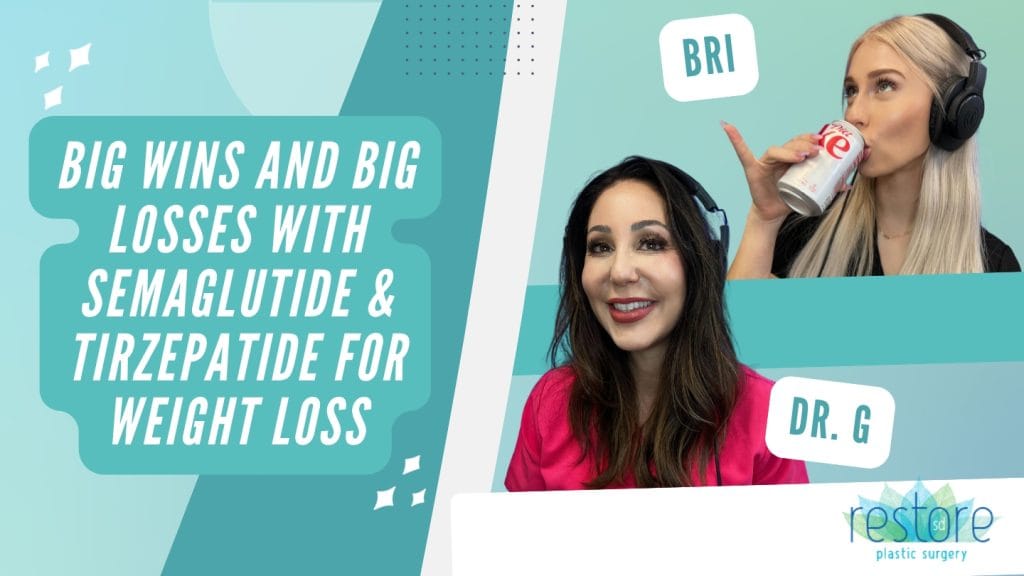
San Diego plastic surgeon Dr. Katerina Gallus recently shared her insights on this topic in her podcast episode, “Big Wins and Big Losses with GLP-1s for Weight Loss,” where she and Restore SD scrub tech Bri discussed the realities of weight loss medications and how to handle excess skin.
In this post, we’re breaking down their top tips for minimizing excess skin during weight loss, plus the best treatment options if you’re already dealing with loose, sagging skin.
Why does weight loss cause excess skin?
When you lose a significant amount of weight, your skin doesn’t always bounce back. This happens because skin stretches to accommodate your previous body size, and depending on factors like age, genetics, how much weight you lost, and how quickly you lost it, your skin may not have enough elasticity to shrink back down.
The faster you lose weight, the less time your skin has to adapt. That’s why Dr. Gallus emphasizes the importance of a slow, steady approach to weight loss whenever possible.
Tips to minimize excess skin during weight loss
Lose weight slowly
Dr. Gallus can’t stress this enough: losing five pounds a week might sound impressive, but it’s not doing your skin any favors. The faster you lose the weight, the less likely you are to maintain those lifestyle changes long-term—and your skin simply doesn’t have enough time to respond to your changing body.
Aim for 1-2 pounds per week to give your skin the best chance to tighten naturally as you lose weight.
Maintain exercise and build muscle
Continue working out during your weight loss journey to maintain muscle mass. Dr. Gallus kept working out throughout her own weight loss journey, and she emphasizes that stopping exercise can make you feel even more tired and won’t help your skin stay firm.
Bri shared her own experience with GLP-1 medications on the podcast. When she initially stopped working out, she felt even more tired. But when she started exercising again, it helped significantly—not just with energy levels, but with her overall results.
Strength training is especially important because building muscle can help fill out areas where you’ve lost fat, giving your skin more support.

Focus on protein and hydration
Making healthy lifestyle changes like eating more protein and drinking more water supports skin health from the inside out. Protein helps your body produce collagen, which is essential for skin elasticity, while staying hydrated keeps your skin supple and resilient.

“I had a great experience at Restore SD. Dr. Gallus is absolutely wonderful and made the process seamless from start to finish. Her resume speaks for itself! From the first consultation, I knew what to expect, and when, with the process of my procedure and after-care clearly explained, and all my questions answered. The process was very collaborative and she treated me with respect, honesty, and set clear expectations. I am very happy with my results, and would absolutely recommend her to anyone inquiring.”
—Google Review for Dr. Gallus
Non-surgical treatments for mild skin laxity
If you’ve lost 10-20 pounds and are noticing some mild skin laxity, you may not need surgery. Dr. Gallus and her team offer non-surgical options that can help tighten your skin as you continue your weight loss journey.
Radiofrequency microneedling
Radiofrequency microneedling combines tiny needles with radiofrequency energy to stimulate collagen production deep within the skin. This treatment can help keep skin tight during the weight loss process and improve texture and firmness over time.
Renuvion
Renuvion is a skin tightening treatment that uses helium plasma and radiofrequency energy to heat the underside of the skin, triggering collagen contraction and stimulating new collagen production. It can help maintain skin elasticity during weight loss and is particularly effective for the abdomen, arms, and thighs.
Surgical solutions for excess skin
If you’ve lost a significant amount of weight and are left with excess skin that is beyond the scope of non-surgical treatment, surgery may be the best option to help you achieve the body you’ve worked so hard for.
Wait until you reach your goal weight
Before you consider surgery, Dr. Gallus recommends reaching your goal weight (or at most 15 pounds within your goal weight) and staying stable there for a while. Her “wait and see what you got” philosophy means you’ll have a clearer picture of exactly what skin needs to be addressed and what might have tightened on its own.
Tummy tuck (abdominoplasty)
A tummy tuck is one of the most common post-weight loss procedures. It removes excess abdominal skin and tightens weakened or separated muscles, creating a smoother, firmer midsection. Many patients who’ve lost significant weight find that a tummy tuck is the final step to feeling confident in their new body.
Breast procedures
Weight loss can cause ptosis (sagging) in the breasts. Depending on your goals, Dr. Gallus may recommend a breast lift to restore a more youthful position, a breast reduction if you have excess tissue, or even a breast augmentation if you’ve lost volume and want to restore fullness. Addressing excess skin after weight loss isn’t just about aesthetics—it’s about feeling comfortable and confident in the body you’ve worked so hard to achieve.
The advantage of working with a plastic surgeon for weight loss
One of the unique benefits of working with a plastic surgery practice like Restore SD is that Dr. Gallus can guide you through your entire journey—from weight loss medications to body contouring.
When a plastic surgery office manages your weight loss, you get the advantage of seamlessly transitioning into discussions about body contouring when the time is right. Dr. Gallus can assess your progress and let you know when you’re a good candidate for procedures like a tummy tuck or body contouring after losing 25 or 50 pounds.
If you’ve lost weight and are frustrated by loose, sagging skin, Dr. Katerina Gallus can help you determine the best treatment plan for your body. Whether you need non-surgical skin tightening or a surgical post weight loss body contouring solution like a tummy tuck, Dr. Gallus will create a personalized plan to help you feel confident and comfortable.
Schedule a consultation with Dr. Gallus by calling our La Jolla plastic surgery practice at 858-224-2281 or fill out our online form today!